Inside the Ballon d'Or Race: How Messi and Ronaldo Rewrote the Voting Era

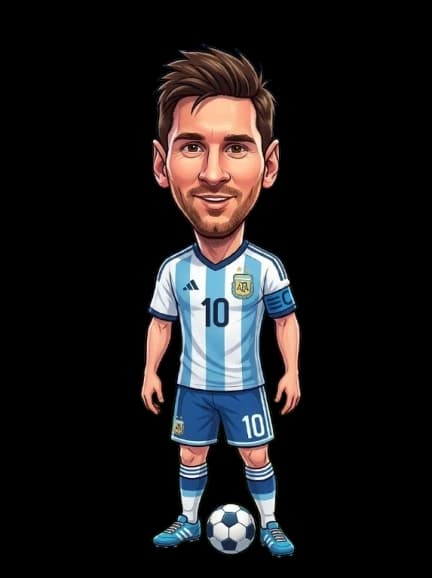

For more than half a century, the Ballon d'Or has represented one of football's most prestigious individual honours. The award existed long before Lionel Messi and Cristiano Ronaldo, with legends such as Johan Cruyff, Michel Platini, Marco van Basten, Ronaldo Nazário and many others defining different eras.
But no period changed the cultural meaning of the award quite like the Messi–Ronaldo era. Between 2008 and 2017, every Ballon d'Or winner was one of those two players. The award stopped feeling like a simple annual announcement and increasingly became another chapter in the sport's biggest individual rivalry.
That does not mean the Ballon d'Or was designed to measure who was objectively the greatest footballer. It is a vote, and voting inevitably involves interpretation. Goals, trophies, performances, decisive moments, consistency and reputation all interact. That is exactly what made the Messi–Ronaldo race so compelling.
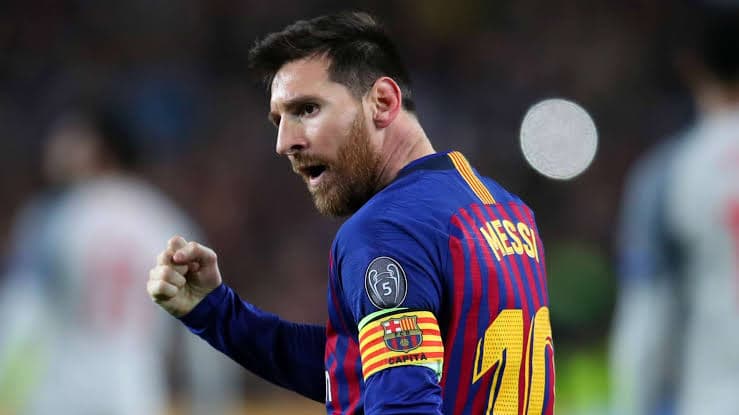
The basic numbers are extraordinary. Lionel Messi has won the Ballon d'Or eight times, while Cristiano Ronaldo has won it five times. Their combined total of thirteen victories represents an unprecedented concentration of the award in two careers.
Messi's eight wins came in 2009, 2010, 2011, 2012, 2015, 2019, 2021 and 2023. Ronaldo's five came in 2008, 2013, 2014, 2016 and 2017.
The wider history also matters. Luka Modrić won in 2018, Karim Benzema in 2022, Rodri in 2024 and Ousmane Dembélé in 2025. The 2020 award was cancelled rather than awarded.
Ballon d'Or Wins
Before Messi and Ronaldo, winning the award three times already placed a player among a very small group. Messi then moved beyond that level, while Ronaldo eventually joined him as a five-time winner.
Cristiano Ronaldo opened the modern chapter in 2008. Playing for Manchester United, he combined explosive athleticism, increasingly refined finishing and elite Champions League performances to win his first Ballon d'Or.
It was more than Ronaldo's first individual crown. It also marked the beginning of a period in which the award would repeatedly return to the same two names.
A year later, the balance changed dramatically. Barcelona's treble-winning 2008/09 campaign helped Lionel Messi win his first Ballon d'Or, and he did so by a record margin at the time.
UEFA records that Messi collected 473 points out of a possible 480 in the 2009 vote, finishing 240 points ahead of Ronaldo. He also scored nine goals during Barcelona's Champions League campaign, including in the final against Manchester United.
From 2009 through 2012, Messi did something that had previously seemed almost impossible: he won four consecutive Ballon d'Or awards.
The sequence reflected more than one outstanding season. Messi's case combined elite scoring with playmaking, dribbling, ball progression and an increasingly central role in Barcelona's attacking structure.
The 2011 award followed another Champions League-winning Barcelona campaign. The 2012 award arrived after an extraordinary individual scoring year in which Messi scored 91 goals for club and country, according to UEFA's historical account.
The 2008–2017 Ballon d'Or Sequence
The 2013 Ballon d'Or remains one of the most useful examples of why the award cannot be reduced to a single statistic.
Ronaldo won with 1,365 points, ahead of Messi on 1,205 and Franck Ribéry on 1,127. Ronaldo scored 69 goals in 59 games across club and country and produced one of the year's defining international moments with his hat-trick against Sweden in the World Cup play-off.
Yet Ribéry's case remained powerful because Bayern Munich had enjoyed a historic treble-winning season. That created a fundamental question: should the award lean more heavily toward the best individual performer, or toward the player whose individual excellence was combined with the strongest collection of team trophies?
Ronaldo ultimately won. The importance of the vote, however, lies in the debate it created. It showed how different interpretations of greatness could lead voters toward different conclusions even when all three candidates had exceptional cases.
Ronaldo retained the award in 2014 after a remarkable Champions League campaign with Real Madrid. His 2013/14 season included the famous 17-goal Champions League record, while Madrid won La Décima — the club's long-awaited tenth European Cup.
Messi answered in 2015. Barcelona won the Champions League, La Liga and Copa del Rey, completing another treble. Messi's individual influence was central to that campaign, while his partnership with Luis Suárez and Neymar became one of the defining attacking combinations of the period.
The pattern tells us something important about the rivalry: neither player simply owned the award forever. Their strongest seasons repeatedly forced voters to reassess what they valued most.
Ronaldo then produced one of the strongest two-year stretches of his Ballon d'Or career.
In 2016, he helped Real Madrid win the Champions League and Portugal win UEFA EURO 2016. UEFA's voting report records Ronaldo with 745 votes, comfortably ahead of Messi on 316.
In 2017, Ronaldo won again after another Champions League triumph with Real Madrid. He scored 19 goals in UEFA competition that year and finished the calendar year with 48 goals in 54 appearances for club and country according to UEFA's contemporary breakdown.
Those two victories brought Ronaldo level with Messi on five Ballon d'Or awards at the time. It was the closest the historical race had been since Messi's four-award run.
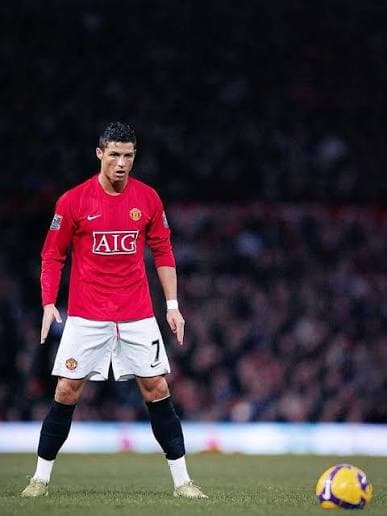
Goals are easy to remember, which is why Ballon d'Or debates often become scoring comparisons. But the award has never been a pure goalscoring prize.
Voters have historically considered individual performances, team success, major matches, consistency and the overall impact of a player. That creates room for two very different footballers to build equally compelling cases.
Messi's strongest argument has often included chance creation, dribbling, passing and control of possession alongside his scoring. Ronaldo's strongest argument has frequently centred on goalscoring volume, decisive finishing, athletic transformation and Champions League impact.
That contrast is one reason their rivalry remained so difficult to settle. The question was never simply who scored more. It was what a voter believed mattered most in defining the best individual season.
The ten-year run ended in 2018.
Luka Modrić won the Ballon d'Or after a season in which he helped Real Madrid win another Champions League and then led Croatia to the World Cup final. It was the first time since 2007 that neither Messi nor Ronaldo won the men's award.
The result did not erase their dominance. Instead, it demonstrated that the voting field could still open when another player's combination of individual performance and team achievement became strong enough.
Messi returned to the top in 2019, but the result was unusually close. Liverpool's Virgil van Dijk finished second after a season in which Liverpool won the Champions League.
France Football's retrospective described it as one of the closest votes in the award's history. Van Dijk actually received more first-place votes than Messi, but Messi finished ahead on the overall points system.
This is an important detail because it demonstrates how the Ballon d'Or works. A player does not necessarily win simply by being the first choice of the largest number of voters. The ranking positions assigned by the full jury also matter.
One of the most important developments in the modern Ballon d'Or is easy to overlook: the award's evaluation framework changed in 2022.
Before the change, the award was judged using criteria that included individual and collective performances during the relevant year, the player's class and fair play, and career considerations.
Since 2022, the evaluation period follows the sporting season from August to July. The criteria are ordered by importance: first individual performances and decisive or impressive character; second collective performances and trophies; and third class and fair play.
That change matters when comparing winners across different eras. A Ballon d'Or from 2010 should not automatically be interpreted through exactly the same framework as one from 2023 or 2025.
Messi added three more Ballon d'Or victories after the original duopoly ended: 2019, 2021 and 2023.
The 2021 award followed Argentina's Copa América triumph and another prolific season. The 2023 award came after Messi's World Cup victory with Argentina, making the tournament a major part of the discussion surrounding his case.
Between those victories came two different winners. Robert Lewandowski's Bayern Munich campaign was followed by Karim Benzema's 2022 triumph, before Messi returned to the top in 2023.
Rodri won in 2024, and Ousmane Dembélé became the 2025 winner. The historical record therefore shows that the post-2017 era was much more open than the decade that came before it.
The most important legacy of Messi and Ronaldo may not be the thirteen trophies between them. It may be the standard their seasons created.
During their peak years, performances that would previously have been considered extraordinary could suddenly feel like the minimum requirement for entering the debate. A player could score 40 or 50 goals, win major trophies and still find himself compared against someone producing an even more extreme season.
That pressure also changed the way fans consumed individual awards. Instead of simply discussing the winner, supporters began tracking voting points, runner-up finishes, first-place votes, Champions League performances and international tournaments in increasingly microscopic detail.
Eight versus five is a striking statistic, but it cannot by itself answer the larger question of who was the greatest footballer.
The award is decided by voters rather than by a fixed performance formula. Its criteria have also changed over time, and the competitive environment around each season is different.
A player's Ballon d'Or total therefore tells us something meaningful: how often that player convinced the award's voting body that he had produced the strongest overall case in a given period.
It does not automatically tell us who had the best career, who had the greatest peak, who was the best teammate, who was the most complete player or who would win a hypothetical match between different eras.
Messi's case is built around unprecedented consistency at the very top of the award. His eight victories include a four-year run from 2009 through 2012 and three additional victories after the original Messi–Ronaldo duopoly had ended.
His strongest Ballon d'Or seasons generally combined elite scoring with creative responsibility. That combination allowed his case to survive even when another candidate had a strong argument based on trophies or goals alone.
Ronaldo's five victories tell a different story. Rather than one uninterrupted run, his awards came across a career that repeatedly reinvented itself.
He won first as a dynamic Manchester United winger, then returned to the top after becoming an extraordinary goalscorer at Real Madrid. His 2013, 2014, 2016 and 2017 victories were closely connected with Champions League performances and major club or international achievements.
That longevity is important. Ronaldo was not simply competing with Messi during one short peak. He remained capable of building a Ballon d'Or-winning case while his position, responsibilities and style evolved dramatically.
There is a temptation to reduce the Messi–Ronaldo era to a simple scoreboard: eight Ballon d'Ors against five. But that misses why the rivalry mattered.
For almost a decade, two players repeatedly produced seasons strong enough to dominate the world's individual football conversation. Their styles were different, their strengths were different and their routes to success were different.
Messi represented control, creation, dribbling and extraordinary attacking intelligence. Ronaldo represented athletic evolution, finishing, movement, mentality and an extraordinary ability to repeatedly produce decisive goals.
The Ballon d'Or did not create that rivalry. It gave the rivalry an annual stage.
From Ronaldo in 2008 to Ronaldo again in 2017, every men's Ballon d'Or belonged to either Messi or Ronaldo. That ten-year sequence is the clearest statistical expression of their dominance.
But the deeper story is not simply that they collected awards. It is that they repeatedly forced the football world to debate the definition of an exceptional season.
Should goals outweigh creativity? Should Champions League success outweigh domestic dominance? How much should an international tournament matter? Does a treble beat an extraordinary individual statistical season? How should voters compare attackers, midfielders and defenders?
There has never been one permanent answer. That is precisely why the Ballon d'Or race remained interesting.
Lionel Messi has won the men's Ballon d'Or eight times, the most in the history of the award. Cristiano Ronaldo is second with five.
Cristiano Ronaldo has won five Ballon d'Or awards: 2008, 2013, 2014, 2016 and 2017.
Lionel Messi has won eight: 2009, 2010, 2011, 2012, 2015, 2019, 2021 and 2023.
Luka Modrić broke the streak in 2018. Before him, every men's Ballon d'Or winner from 2008 through 2017 had been either Messi or Ronaldo.
No. The voting framework changed in 2022. The modern criteria focus first on individual performance and decisive or impressive character, followed by collective performance and trophies, then class and fair play. The evaluation period also moved from the calendar year to the sporting season.
Yes. Ronaldo won in 2008, Messi from 2009 through 2012, Ronaldo in 2013 and 2014, Messi in 2015, and Ronaldo in 2016 and 2017.
No. The 2020 men's Ballon d'Or was cancelled rather than awarded.
The Ballon d'Or record gives Messi the numerical advantage, but the history behind those numbers is far more interesting than the final total.
Messi's eight victories represent the highest total ever recorded. Ronaldo's five came across an unusually long period of elite performance and included a transformation from winger to devastating goalscorer. Together, they dominated the award for a decade in a way football had rarely seen before.
The real legacy of the era is therefore not simply 8–5. It is the standard they established. For years, the world's best individual football award became the annual stage on which two extraordinary careers were compared, analysed and argued over.
And perhaps that is the most important lesson from the Ballon d'Or race: awards can record greatness, but they cannot completely define it.
Official historical list of Ballon d'Or winners from 1956 through the modern era, including Messi, Ronaldo, Modrić, Benzema, Rodri and Dembélé.
Official UEFA account of Ronaldo's 2013 victory, including his 69 goals in 59 games and his World Cup play-off hat-trick against Sweden.
Details the 2016 voting result and Ronaldo's Champions League and EURO 2016 campaign.
Official UEFA coverage of Ronaldo's fifth Ballon d'Or and the 2017 voting era.
Documents Messi's record-margin 2009 victory after Barcelona's historic campaign.
Official account of Ronaldo's first Ballon d'Or after Manchester United's 2007/08 campaign.
Explains the modern Ballon d'Or criteria, including the 2022 change from calendar-year judging to the sporting season.
Official Ballon d'Or explanation of the current criteria and voting structure.
Official retrospective on the extremely close 2019 Messi–Van Dijk vote.
Provides historical context for Messi's four straight wins from 2009 to 2012 and Ronaldo's rise to three awards.
