Champions League Final Appearances Compared: Messi vs Ronaldo

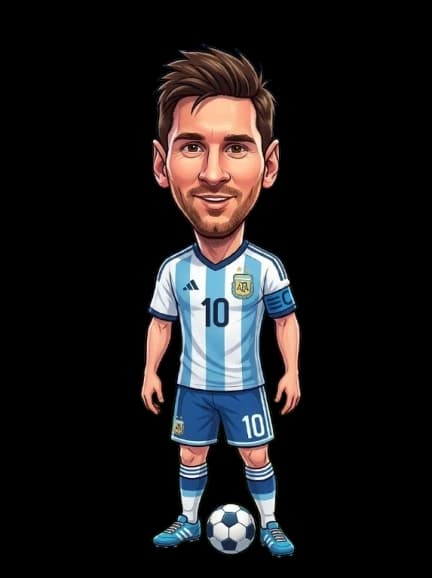

For most footballers, reaching one UEFA Champions League final is the defining achievement of a career. Lionel Messi and Cristiano Ronaldo made the journey feel almost routine. They did not simply participate in Europe's biggest club competition; they became two of the players most closely associated with its modern history.
But there is an important distinction between being part of a winning campaign and actually appearing in the final. Messi was involved in Barcelona's 2006 Champions League-winning season but did not play in the final against Arsenal. His final appearances came in 2009, 2011 and 2015 — and Barcelona won all three. Ronaldo, meanwhile, appeared in six finals between Manchester United and Real Madrid, winning five and losing only once.
That difference changes the conversation. Messi has the cleaner final record. Ronaldo has the larger sample, the extra appearance, five victories and a remarkable record of scoring in three separate finals. Neither statistic tells the whole story on its own.
Champions League Finals: Appearances vs Wins
Messi's Champions League story contains an unusual footnote. Barcelona won the 2005/06 competition, defeating Arsenal 2-1 in Paris, but Messi did not take part in the final. UEFA therefore records 2006 among his victorious campaigns while distinguishing it from the three finals he actually played.
That distinction matters because football statistics can sometimes flatten very different experiences into one number. Saying that Messi has four Champions League final wins would be incorrect if the word 'final' means a match he played. Saying he has three Champions League titles is correct. He was part of the 2006 winning squad and then played in the victorious finals of 2009, 2011 and 2015.
Ronaldo's five Champions League titles are also unusually distributed. He won his first with Manchester United in 2008 before winning four more with Real Madrid in 2014, 2016, 2017 and 2018. That gives him five final victories as a player — one with United and four with Madrid.
Messi's three final appearances all came in a Barcelona team whose identity was built around technical control. The club's greatest European sides of the period were comfortable monopolising possession, moving opponents from side to side and creating overloads around the ball.
Messi was not simply the player waiting at the end of those attacks. His role changed according to the tactical demands of the team. At different stages of his Barcelona career he could operate from the right, drift centrally, drop into midfield or attack the penalty area. That flexibility allowed him to influence matches before the final action as well as finish them.
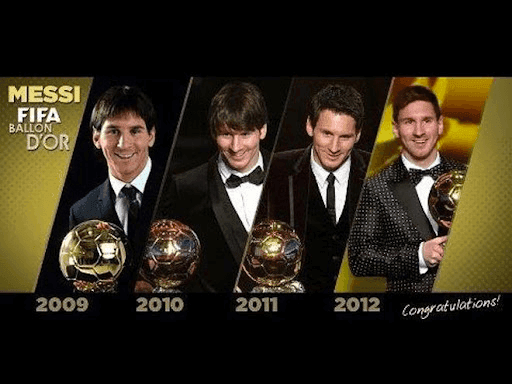
Ronaldo's path was more evolutionary. At Manchester United he began as an explosive winger, gradually developing the physical strength, movement and finishing required to become a devastating goalscorer. At Real Madrid, that transformation accelerated. His game increasingly revolved around attacking space, arriving inside the box and converting chances at extraordinary volume.
The numbers eventually reflected that evolution. UEFA records Ronaldo with 140 Champions League goals, the highest total in the competition's history, while Messi finished his European career with 129. Ronaldo also holds the record for Champions League knockout-stage goals and remains the only player to have scored in three separate Champions League finals.
Messi's final record is almost impossible to improve. Three appearances, three victories. Every time Barcelona reached the final with Messi actually on the pitch, the club lifted the trophy.
His first final appearance came in Rome in 2009 against Manchester United. Barcelona won 2-0, with Samuel Eto'o opening the scoring before Messi produced one of the defining images of his European career: a headed goal against a much taller Manchester United defence.
Two years later the same opponents stood between Barcelona and another European crown. At Wembley in 2011, Messi scored again as Guardiola's side defeated Manchester United 3-1. This time his goal came from outside the penalty area, a low strike that demonstrated how much more than a penalty-box finisher he had become.
The third and final victory came in Berlin in 2015. Barcelona defeated Juventus 3-1 to complete a remarkable campaign under Luis Enrique. Messi did not score in the final, but his involvement throughout the season helped establish the third European crown of his career.
There is another reason Messi's record stands out: he scored in two of the three finals he played. Both goals came against Manchester United, meaning one of the most important games of his career repeatedly brought him face-to-face with the same opponent — and repeatedly ended with him lifting the trophy.
Ronaldo's story is longer and more complicated. He appeared in six Champions League finals across eleven years, beginning with Manchester United's 2008 victory and ending with Real Madrid's triumph over Liverpool in 2018.
The first final came in Moscow in 2008. Ronaldo scored Manchester United's goal against Chelsea with a powerful header, although the match ultimately went to penalties. United prevailed in the shootout, giving Ronaldo the first Champions League title of his career.
One year later came his only final defeat. Manchester United faced Guardiola's Barcelona in Rome, and the Spanish side won 2-0. Ronaldo started brightly and tested Barcelona early, but the match gradually moved toward Barcelona's preferred rhythm. Messi scored the second goal with a header, creating the first major final chapter in a rivalry that would define European football for the next decade.
Then came Real Madrid. Ronaldo's next four final appearances all ended in victory. In 2014, Real Madrid defeated Atlético Madrid 4-1 after extra time in Lisbon. Ronaldo scored the final goal from the penalty spot, although the match had already been decided by then.
In 2016, Madrid defeated Atlético again, this time on penalties after a 1-1 draw in Milan. In 2017, Ronaldo scored twice against Juventus as Madrid became the first team in the Champions League era to retain the trophy. In 2018, Madrid completed three consecutive titles by beating Liverpool 3-1 in Kyiv.
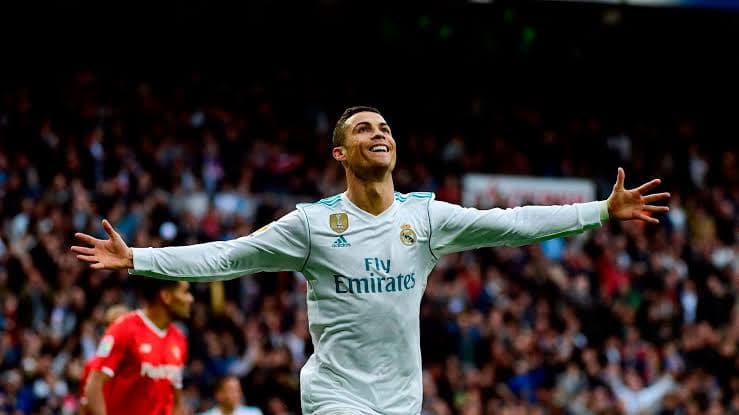
Final appearances and trophies are only part of the comparison. The goals scored in those matches tell another story entirely.
Ronaldo has scored four goals in Champions League finals, the most by any player in the Champions League era. He scored for Manchester United against Chelsea in 2008, against Atlético Madrid in 2014 and twice against Juventus in the 2017 final.
Messi scored twice in Champions League finals, both against Manchester United: once in Rome in 2009 and again at Wembley in 2011. His final goal record is therefore lower, but his team won every final in which he played.
That creates an interesting statistical paradox. Ronaldo has more final goals because he played in twice as many finals. Messi has the perfect winning percentage because Barcelona won every final in which he appeared. One measures volume; the other measures perfection.
A Champions League final is one match. Reaching it requires surviving an entire European campaign, and this is where Ronaldo's record becomes particularly difficult to compare with Messi's.
UEFA credits Ronaldo with 67 Champions League knockout-stage goals, a competition record. His 140 overall goals also stand at the top of the all-time Champions League list. He was the competition's top scorer seven times and scored 17 goals during Real Madrid's 2013/14 title-winning campaign, another record.
That means Ronaldo's Champions League legacy cannot really be evaluated by looking only at his six finals. Some of his most important performances came in the quarter-finals and semi-finals, when a single bad night could eliminate an otherwise dominant team.
The hat-trick against Wolfsburg in 2016 overturned a 2-0 first-leg deficit. Against Bayern Munich in 2017, Ronaldo scored five goals across the two quarter-final legs. Against Atlético Madrid in the semi-finals that same season, he scored a hat-trick in the first leg before Madrid completed the job.
Those matches reveal something that a final-only comparison misses: Ronaldo repeatedly produced his biggest scoring numbers when the tournament became most unforgiving.
Messi's European influence followed a different pattern. UEFA's statistics place him second behind Ronaldo in Champions League goals, with 129, but his game was never solely about finishing.
At his peak Barcelona could use Messi as a creator, dribbler, midfielder, false nine or final attacker within the same match. His ability to drop toward the ball could create an extra passing option in midfield, while his acceleration and close control allowed him to turn that involvement into direct goal threat.
That makes comparisons based exclusively on final goals especially misleading. A player can dominate a final without scoring, while another can score without controlling the overall rhythm of the match.
The 2009 and 2011 finals are particularly useful because Messi and Ronaldo were on opposite sides in both matches.
In Rome, Manchester United entered the match as defending champions and had already defeated Barcelona in the 2008 final. Yet Barcelona gradually took control. Eto'o opened the scoring before Messi's header settled the contest. Ronaldo's final ended in defeat; Messi's ended with a winner's medal and a goal.
Two years later, the same rivalry returned at Wembley. By then Barcelona's midfield control had become even more pronounced. Xavi and Iniesta repeatedly found passing lanes, while Messi operated between midfield and attack. His goal made the score 2-1 before David Villa eventually sealed a 3-1 victory.
Those two finals illustrate how context matters. The players were not operating in isolation. They were pieces of two elite teams with contrasting tactical identities, and the outcome depended on how those structures interacted.
It is tempting to turn every Champions League final into a one-on-one comparison between Messi and Ronaldo. Football does not work that way.
Messi's Barcelona victories were built around extraordinary teammates. Xavi, Iniesta, Busquets, Piqué and Dani Alves formed the technical and tactical foundation of one of the defining club sides of the modern era. Ronaldo's Real Madrid victories came alongside another extraordinary core: Modrić, Kroos, Casemiro, Ramos, Marcelo, Benzema and others who repeatedly delivered in European competition.
This is why final records should never be interpreted as individual records in isolation. A player's influence matters enormously, but reaching and winning a Champions League final is always a collective achievement.
The sheer frequency of Ronaldo's final appearances is one of the strongest arguments for his Champions League legacy. Six finals across two clubs required more than peak ability. It required longevity, adaptation and the ability to remain decisive as teammates, managers and tactical systems changed around him.
His evolution is especially important. The Ronaldo who won the Champions League with Manchester United in 2008 was not the same player who scored 105 Champions League goals for Real Madrid. At United he could dominate from wide areas. At Madrid he increasingly became a devastating penalty-box specialist whose movement allowed teammates to exploit spaces he created.
UEFA's records underline just how long that peak lasted. Ronaldo remains the competition's leading scorer, its record holder for knockout-stage goals, and the only player to have scored in three different Champions League finals.
Messi's argument is different. He does not have Ronaldo's six final appearances, but he does not have a single defeat in the three finals he played. Each of those victories came while he was an important attacking figure for Barcelona, and he scored in two of them.
His wider Champions League record is also extraordinary. Messi scored 129 goals in 163 appearances before leaving European football for Inter Miami, placing him second on the all-time scoring list. He also won the competition three times and became one of its most influential creators and finishers.
The strongest argument for Messi is therefore not simply that he never lost a final. It is that his influence was broader than the final itself. He could control possession, create chances, beat defenders and finish attacks, often changing his role according to what Barcelona needed.
Ronaldo's case is built around scale and repeatability. Six finals. Five victories. Four final goals. Seven Champions League top-scorer awards. A record 140 goals. A record 67 knockout-stage goals. Five titles across Manchester United and Real Madrid.
Perhaps the most remarkable part is that these numbers were accumulated across different versions of Ronaldo. He was a young winger at United, a Ballon d'Or-winning superstar at Madrid, and eventually one of football's most specialised penalty-area finishers.
His Champions League career therefore represents more than extraordinary scoring. It is a case study in adaptation. Ronaldo changed his game without losing the defining quality that made him elite: an almost obsessive ability to turn important moments into goals.
There is a danger in treating Champions League finals as the ultimate statistical scoreboard. The final is the most visible match, but it represents only one night at the end of a much longer tournament.
A player can score a decisive goal in a final while having an average tournament. Another can dominate the competition for months and then lose the final because of one deflection, one mistake or a penalty shootout. Football's knockout structure creates these contradictions constantly.
That is especially relevant when comparing Messi and Ronaldo. Their final records are different, but their broader Champions League records show why both became synonymous with European excellence.
The numbers show why there is no single statistic capable of settling the argument. Ronaldo leads the major volume categories and owns the competition's greatest scoring record. Messi has a smaller but perfect record in the finals he actually played.
The simplest explanation is that Messi and Ronaldo solved different problems for their teams.
Messi could make a team better by becoming the team's creative centre. He could receive between the lines, carry the ball through pressure, combine with midfielders and create the final pass before finishing the move himself.
Ronaldo increasingly made teams better by becoming the ultimate end point. His movement stretched defensive lines, his positioning created space for teammates and his finishing turned small opportunities into goals. As his career developed, his ability to attack the final action became increasingly devastating.
That distinction helps explain why comparing their final goals alone is inadequate. Messi's influence could begin 30 or 40 metres from goal. Ronaldo's most dangerous contribution might begin with a run that a defender noticed only after it was too late.
If the question is simply 'Who has the better Champions League final record?', Messi has an extraordinary answer: three appearances, three wins and two goals.
If the question becomes 'Who has the greater Champions League career?', the evidence becomes much more complicated. Ronaldo leads Messi in goals, appearances, titles, final appearances, final wins and knockout-stage scoring. Messi's case rests on his extraordinary scoring record, three titles and the quality of his all-round influence at his peak.
And that is ultimately why the comparison has survived for so long. Neither player merely accumulated statistics. They changed what supporters expected from a Champions League superstar.
Messi's Champions League story is one of control, invention and perfection on the nights that mattered most to his team. Ronaldo's is one of longevity, scoring volume and repeated destruction of knockout-stage opponents.
Messi played in fewer finals but never lost one. Ronaldo played in twice as many and won five. Messi scored twice in finals. Ronaldo scored four times. Ronaldo owns the all-time Champions League scoring record, while Messi remains the second-highest scorer in competition history.
The most honest conclusion is therefore not that one number destroys the other. It is that they represent two different versions of greatness.
Messi made the Champions League look like a canvas. Ronaldo made it look like a scoreboard.
Their careers will continue to be compared because their achievements overlap so heavily while their methods were so different. One created through control and improvisation. The other evolved into perhaps the most relentless big-game scorer European football has produced.
The Champions League does not provide a single answer to the Messi-Ronaldo debate. It provides something more interesting: a record of two extraordinary players who dominated the same competition in remarkably different ways.
Lionel Messi played in three Champions League finals: 2009, 2011 and 2015. He won all three. Barcelona also won the 2006 Champions League while Messi was part of the campaign, but he did not play in the final.
Cristiano Ronaldo played in six Champions League finals. He won five: 2008 with Manchester United and 2014, 2016, 2017 and 2018 with Real Madrid. His only defeat came against Barcelona in 2009.
Ronaldo scored four Champions League final goals, compared with two for Messi. UEFA lists Ronaldo as the only player to have scored in three separate Champions League finals.
Cristiano Ronaldo leads the all-time Champions League scoring list with 140 goals, while Lionel Messi is second with 129. Ronaldo also holds the competition record for knockout-stage goals.
Yes, Messi was part of Barcelona's 2005/06 Champions League-winning campaign, but he did not play in the final against Arsenal. UEFA therefore recognises 2006 among his Champions League titles while distinguishing it from the three finals he actually played.
By winning percentage, Messi has the cleaner record because he won all three finals he played. Ronaldo has the larger record by volume, with six appearances and five victories. Which record is more impressive depends on whether the emphasis is perfection or sustained success across a much larger number of finals.
Champions League final appearances offer one of the clearest windows into the careers of Messi and Ronaldo, but they should not be treated as the entire story.
Messi's three final victories from three appearances represent remarkable perfection. Ronaldo's five victories from six appearances represent extraordinary longevity and repeatability. Ronaldo's four final goals and record 140 Champions League goals reinforce his reputation as the competition's greatest scorer, while Messi's 129 goals and three victorious finals demonstrate a level of sustained influence that very few players have approached.
The fascinating part is that neither career needs the other to become extraordinary. Their rivalry simply gave football two different answers to the same question: what does it take to dominate Europe's biggest stage?
Messi answered with imagination, control and creative authority. Ronaldo answered with adaptation, relentless scoring and an extraordinary ability to turn knockout football into his personal hunting ground.
The trophies tell one story. The finals tell another. The knockout rounds tell another still. Put them together, and the conclusion becomes difficult to escape: the Champions League was not simply a competition in which Messi and Ronaldo played. For more than a decade, they were two of the central characters in its history.
Official UEFA records covering final appearances, final wins and final goals.
Official UEFA profile covering Ronaldo’s appearances, goals, knockout records and finals.
Official UEFA profile covering Messi’s Champions League career and final victories.
Official UEFA historical record of Ronaldo and Messi in the Champions League scoring rankings.
Official UEFA overview of Messi’s Champions League titles and career records.
UEFA’s historical archive for Champions League finals, results and records.
Career-level competition statistics and match history.
Career-level competition statistics and match history.
