Club vs Country: Where the Goal Tallies Diverge

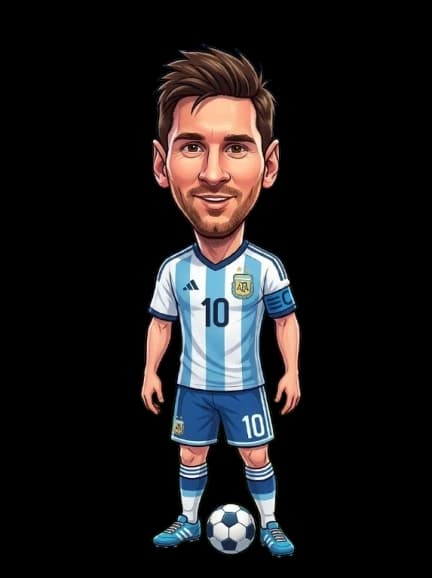

A goal is recorded the same way whether it comes at a packed club stadium on a Saturday afternoon or in a World Cup knockout match four years in the making. But the conditions that produce that goal can be completely different. That is why club vs country comparisons require more context than simply dividing goals by appearances.
At club level, elite forwards can play 40, 50 or even 60 competitive matches in a season. They train with the same teammates almost every day, learn the same attacking patterns and become familiar with the strengths and habits of the players around them. A striker may know exactly when a midfielder will release the ball or where a full-back will arrive.
International football removes much of that repetition. Players arrive from different clubs, sometimes from different tactical cultures, and may have only a few training sessions before an important match. A national-team manager cannot build a squad through a transfer window. The player pool is determined by nationality, eligibility and form.
That difference does not make international football easier or harder in every situation. It makes it different. And the careers of Lionel Messi and Cristiano Ronaldo provide an unusually large sample for studying exactly how different it can be.
The biggest reason club and international numbers diverge is simple: players have far more opportunities at club level.
A club forward can have a poor performance on Saturday and another opportunity three or four days later. An international player may wait months for the next meaningful match. In a World Cup, there may be no next opportunity at all after a knockout defeat.
That difference matters when evaluating totals. A 50-goal club season is built from dozens of matches. An international tournament campaign can be remembered because of one goal in one match.
Club football is designed around repetition. Players train together throughout the week and managers can spend an entire season refining the same attacking structures.
For elite forwards, that familiarity can be extremely valuable. They learn which teammates prefer early crosses, which midfielders carry the ball forward and which defenders tend to leave space behind them. Those details become almost automatic after hundreds of training sessions and matches.
Messi experienced this particularly strongly at Barcelona. The club’s long-term tactical environment allowed him to develop relationships with players such as Xavi, Andrés Iniesta, Dani Alves and Luis Suárez. Barcelona’s own records list Messi with 672 goals in 778 appearances for the first team.
Ronaldo experienced a similar kind of continuity during his greatest club spells, particularly at Manchester United and Real Madrid. UEFA records him with 140 Champions League goals in 183 appearances, including 105 goals in 101 Champions League appearances for Real Madrid alone.
The Scale of Elite Club Football
International football has a built-in limitation that club football does not: managers cannot simply recruit a player to solve a weakness.
A club struggling to create chances can buy a creative midfielder, sign a new winger or change its squad during the transfer window. A national team cannot. Its options are limited to eligible players, and sometimes a country simply does not have an equivalent replacement for a missing position.
Training time is another major difference. International managers often have only a few days to prepare a squad. That encourages simpler structures and places a greater burden on individual understanding, decision-making and improvisation.
Forwards therefore have to adapt. The perfect club movement may not be available. The midfielder who normally supplies the final pass may not be there. A player may receive fewer chances, but those chances can become more important because the margin for error is so small.
The international records of Messi and Ronaldo are remarkable precisely because both produced at an extraordinary level despite the structural limitations of national-team football.
UEFA’s updated international records place Ronaldo first with 146 goals in 233 appearances and Messi second with 125 goals in 207 appearances. Their scoring rates are remarkably close: roughly six-tenths of a goal per international appearance across careers spanning more than two decades.
International Goals per Appearance
That is an important correction to the simplistic idea that elite players automatically score much less for their countries. Their opportunities are fewer, their tactical environments change and their teammates change constantly, yet both still maintained exceptional scoring rates.
Ronaldo’s international career has gradually transformed from that of a young wide attacker into the role of Portugal’s principal scoring reference.
His 146 goals are not simply the product of longevity. UEFA’s record shows goals across European Championship matches, World Cup qualifiers, World Cup finals, Nations League fixtures and other internationals. He has also scored for Portugal across 23 consecutive calendar years after his first two appearances in 2003 produced no goals.
The evolution is important. Early in his Portugal career, Ronaldo frequently operated from wider positions and carried more responsibility for progression and dribbling. Later, his role increasingly concentrated on getting into dangerous scoring positions and finishing attacks.
That transformation helped turn international longevity into an extraordinary scoring record. By the end of the 2026 World Cup, Ronaldo had also become the first player to score at six different editions of the tournament.
Messi’s international numbers tell a slightly different tactical story. Argentina increasingly relied on him not only to finish attacks but also to create them.
That meant Messi could move deeper into midfield, receive the ball away from the penalty area and become the player responsible for connecting phases of possession. His value could therefore remain enormous even during matches in which his goal total was modest.
His international career ultimately produced 125 goals in 207 appearances for Argentina. UEFA also records him as Argentina’s most-capped player and leading scorer, with his international career ending in August 2026 after he had captained Argentina through another World Cup campaign.
This is one reason raw goals can miss part of the story. A player who drops deeper to create chances may be doing less finishing without necessarily doing less attacking work.
Nothing exposes the difference between club and country more clearly than the World Cup.
Players may spend years building their reputations at club level, but the World Cup gives them a tiny number of matches on the biggest stage. A player can score in the group stage and still be eliminated a few days later. A single mistake can end an entire campaign.
Defensive preparation also becomes unusually concentrated. National teams have weeks or months to study opponents before a tournament, and coaches know that stopping one elite player can be central to the game plan. Space becomes harder to find and every attacking opportunity carries more weight.
The World Cup records also demonstrate why the two careers should not be reduced to a single scoring statistic. FIFA records Messi with 21 goals across six World Cups and 34 appearances. Ronaldo finished with 11 goals in 27 matches and became the first player to score in six different editions.
Messi’s World Cup career became increasingly complete. He was not simply Argentina’s scorer. He became a playmaker, chance creator, possession controller and attacking reference point while continuing to score.
FIFA’s 2026 records list Messi with 34 World Cup appearances, 23 victories and 21 goals. He also scored in nine consecutive World Cup appearances, a record that illustrates how consistently he contributed across different editions of the tournament.
Ronaldo’s World Cup record is defined differently. His greatest statistical distinction is longevity and repeated scoring across generations. He appeared at six tournaments from 2006 through 2026 and scored at all six, something no other player has achieved.
That distinction matters because tournament scoring is not only about how many goals a player scores in one edition. It is also about whether the player can remain effective across different teams, managers, tactical eras and stages of physical development.
Goals per appearance is useful, but it is not a complete measure of attacking performance.
An appearance does not tell us how many minutes a player played, how many penalties his team won, how many chances he received, what position he occupied or whether he spent large portions of the match creating rather than finishing.
That is why analysts often prefer goals per 90 minutes for certain comparisons. It adjusts for players who have different minute totals. Even that metric, however, needs context because it still does not account for shot quality, role, chance creation or tactical responsibility.
International football creates another complication: the quality and frequency of opponents varies enormously. A World Cup qualifier against a lower-ranked side is not the same test as a World Cup semi-final, just as a domestic league match is not identical to a Champions League knockout game.
Club football has a relatively predictable competitive structure. A player in a major European league knows the level of opponents he will face across a season, while Champions League football provides another layer of elite competition.
International football is much less uniform. A national team can face a developing football nation in qualifying, a traditional power in a tournament and a completely different tactical challenge in a friendly within the same calendar year.
That makes career totals difficult to interpret without looking at the competition itself. A large international tally can reflect longevity, consistency against weaker opponents, dominance against strong opponents or some combination of all three.
The biggest difference may not actually be difficulty. It may be adaptation.
At club level, an elite forward can spend months perfecting a relationship with the same teammates. At international level, that relationship may need to be rebuilt every few months. The player has to understand a new tactical plan quickly and make decisions with less information and less rehearsal.
Messi and Ronaldo were exceptional at making that transition. Their national-team careers lasted long enough to pass through several generations of teammates and managers, yet neither became irrelevant when the tactical environment changed.
There is another reason these two players stand out: they sustained international production for an unusually long period.
Ronaldo scored international goals for Portugal across 23 consecutive years after his debut period, while Messi scored for Argentina in each of the final 21 years of his international career. Those streaks are as important to the story as their final totals because they show how long each player remained a meaningful attacking option.
The table shows why the comparison is more interesting than simply asking who has more goals. Ronaldo has the larger international total, while Messi has the larger World Cup total. Ronaldo has more international appearances, while Messi has more World Cup appearances and victories.
None of this means club football should be ignored. In fact, club football provides the much larger statistical sample for evaluating long-term attacking production.
Messi’s Barcelona career is an excellent example. Barcelona records 672 goals in 778 first-team appearances, alongside 35 trophies. That output was produced over hundreds of official matches in multiple competitions and across different tactical versions of the team.
Ronaldo’s Champions League record provides another illustration. UEFA lists him at 140 goals in 183 Champions League appearances, with 105 of those goals coming in 101 appearances for Real Madrid. The sample is large enough to show sustained excellence rather than a short tournament peak.
Club totals therefore tell us a great deal about sustained production. International totals tell us something different: how a player performs when the team around him is less stable and the opportunities are much less frequent.
The debate often asks which environment is more important. That is probably the wrong question.
Club football measures sustained performance. International football measures adaptation under limited preparation and enormous consequence. Major tournaments add another layer by compressing an entire career narrative into a handful of matches.
A player can be extraordinary in one environment and merely good in another. Messi and Ronaldo are unusual because their records are exceptional in both.
The most revealing part of the Messi-Ronaldo comparison is not that one has more international goals. It is that both managed to remain elite while the conditions around them changed repeatedly.
Ronaldo became Portugal’s record scorer and finished with 146 international goals in 233 appearances. Messi finished with 125 in 207 and built an international career that eventually included Copa América titles, a World Cup title and another World Cup final.
Their club careers tell another side of the story. Messi developed extraordinary statistical consistency inside Barcelona’s long-term system, while Ronaldo produced enormous numbers across several clubs and became the Champions League’s all-time leading scorer.
That is why club and country numbers should not be treated as competing scoreboards. They are different datasets produced by different football environments.
Cristiano Ronaldo. UEFA lists Ronaldo with 146 goals for Portugal and Lionel Messi with 125 for Argentina as of August 31, 2026.
Lionel Messi. FIFA lists Messi with 21 World Cup goals across six tournaments. Cristiano Ronaldo finished with 11 goals in six World Cups.
Players have many more club matches and spend far more time training with their club teammates. That creates greater tactical familiarity and more opportunities to accumulate goals.
Not necessarily. International teams train together less often, have smaller player pools and play fewer matches. A player’s role can also change significantly depending on the national-team system.
Because the sample is extremely small and the competitive pressure is unusually high. Players have only a limited number of matches in each tournament, so every goal can have a disproportionate effect on a campaign.
It is a useful starting point, but not a complete evaluation. Minutes played, tactical role, penalties, chance creation, opponent strength and tournament context can all change what the raw ratio means.
Club football gives elite forwards the luxury of repetition. International football gives them almost the opposite: limited preparation, changing teammates and fewer opportunities to correct mistakes.
Messi and Ronaldo succeeded in both environments, but in different ways. Ronaldo built the larger international scoring total and became the world record holder with 146 goals for Portugal. Messi produced the higher World Cup total, reaching 21 goals across six tournaments, while also becoming a more complete creative reference for Argentina.
The lesson is not that club goals matter less than international goals, or that international goals are automatically more valuable. The lesson is that the numbers describe different challenges.
A great club scorer must reproduce excellence every week. A great international player must reproduce it whenever the national team gets the chance. Messi and Ronaldo managed to do both for more than two decades — which is exactly why their club-versus-country numbers remain so fascinating.
UEFA records Ronaldo at 146 international goals in 233 appearances and Messi at 125 in 207 as of August 2026.
Detailed breakdown of Ronaldo’s 146 goals for Portugal and the circumstances in which they were scored.
Updated UEFA record page covering Messi’s Argentina appearances, goals and international achievements through August 2026.
FIFA’s 2026 review records Messi with 21 World Cup goals across six tournaments and 34 appearances.
FIFA records Ronaldo’s six World Cups, 27 appearances and 11 goals at the tournament.
FIFA confirms Ronaldo became the first player to score at six different World Cups.
Barcelona records Messi’s club career with 672 goals in 778 appearances for the first team.
Barcelona’s historical player database distinguishes Messi’s official and unofficial club matches and goals.
UEFA’s detailed Champions League record provides context for Ronaldo’s extraordinary club-level scoring output.
