The Left-Side Collision: Why Mbappé and Vinícius Keep Finding the Same Space at Real Madrid

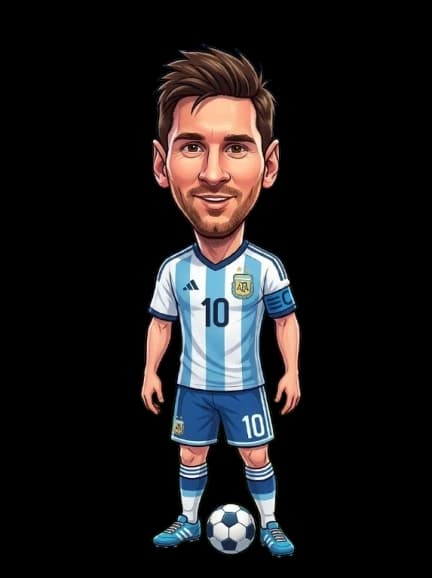

There is a strange problem at the heart of Real Madrid’s attack. The club possesses two of the most dangerous wide attackers in world football, yet the same quality that makes Kylian Mbappé and Vinícius Júnior devastating individually can make them awkward to fit together.
They both like the left.
Not simply the left wing. The more valuable territory is the space between the left touchline and the centre of the pitch — the channel from which a right-footed attacker can face goal, accelerate inside and attack the defensive line.
That is where the tactical puzzle begins.
At first glance, the problem seems obvious. Both are explosive. Both are right-footed. Both are comfortable beginning from the left. Both want to face defenders rather than receive the ball with their backs to goal. Both can attack the space behind a defensive line.
But saying they are simply the same player is inaccurate.
Vinícius has become one of Madrid’s most dangerous ball-carrying and one-on-one attackers. He can hold the width, receive early and force the full-back into a duel.
Mbappé is more naturally attracted toward the inside-left channel and central finishing positions. He can start wide, but his most dangerous actions often finish closer to the penalty spot or in the space between centre-back and full-back.
So the problem is not identical skill sets. It is overlapping attacking geography.
Two players can have different jobs and still want to occupy the same piece of grass.
To understand the Mbappé-Vinícius problem, it helps to stop thinking about positions as fixed labels.
A football pitch is not divided simply into “left wing,” “centre” and “right wing.” Elite attacks operate through corridors and half-spaces.
Vinícius can begin near the touchline and move inward. Mbappé can begin centrally and drift toward the same inside-left space.
If both arrive there at the same time, Madrid have not doubled their attacking threat. They may simply have put two elite players into one defender’s zone.
The raw production makes it tempting to compare Mbappé and Vinícius as if they were competing for the same job. But the numbers actually show complementary strengths.
These figures come from FBref’s 2025/26 domestic-league comparison and should not be interpreted as a complete description of their roles.
But they reveal something useful. Mbappé finished far more attacks. Vinícius spent more of his game generating attacking situations through carrying, dribbling and progression.
The tactical objective should therefore not be to make them behave identically. It should be to make their different strengths arrive in different zones at different moments.
Vinícius is at his most dangerous when he can receive facing the opposition full-back.
That sounds simple, but it is strategically important.
If Vinícius receives close to the touchline, the defender has to respect the possibility of him going outside. That creates the space for Vinícius to cut inside.
If he receives too centrally, the defender can receive help from the centre-back without giving up as much territory.
The touchline is therefore not just where Vinícius stands. It is part of the mechanism that gives his dribbling value.
Mbappé’s career at Paris Saint-Germain established a strong pattern: start from the left, attack inside, accelerate behind the defence and finish with his right foot.
Moving to Madrid did not erase those instincts.
Even when listed as a centre-forward, Mbappé can drift left because that movement gives him a familiar attacking angle. From there he can receive into space, combine with teammates or attack the gap between the full-back and centre-back.
The problem is that Vinícius already owns much of that territory.
Jude Bellingham provided one of the clearest descriptions of the problem in 2026.
He acknowledged that he, Vinícius and Mbappé can sometimes become too concentrated on the left when all three are given freedom to interpret their positions.
That is a crucial distinction.
Freedom is valuable for elite attackers. But three players independently choosing the same valuable space is not freedom anymore. It is congestion.
Imagine Madrid building an attack down the left.
Suddenly Madrid can have five or six players occupying a relatively narrow section of the pitch.
The problem is not that Madrid have too many talented players. The problem is that talent has been compressed into one zone.
The opposition can defend the crowded side with fewer players than Madrid might expect because the attackers themselves have reduced the number of useful passing angles.
This is where the overlap becomes more than a theoretical tactical problem.
Vinícius wants isolation.
If Mbappé occupies the same inside lane and Bellingham arrives nearby, the full-back no longer has to defend Vinícius alone. The defensive line can narrow without leaving an enormous central hole.
The very presence of elite teammates can therefore reduce one of Vinícius’s favourite conditions: open space around his first touch.
The relationship works differently from Mbappé’s perspective.
When Vinícius attracts a second defender, Mbappé can attack the space created elsewhere. When Vinícius drives toward the byline, Mbappé can attack the six-yard box. When Vinícius carries the ball inside, Mbappé can move across the defensive line.
That is why separating them completely would be a mistake.
Their overlap is also the source of their potential.
This is perhaps the most important conclusion from studying the pair.
Mbappé and Vinícius do not need to stay on opposite sides of the pitch.
They need to avoid arriving in the same zone at the same time.
This is how overlap becomes complementarity.
One common solution is to say that Mbappé should simply play centre-forward permanently.
That solves one problem but creates another.
A rigid central role can reduce one of Mbappé’s greatest advantages: the ability to start outside the defensive line and attack inward at speed.
His value comes partly from positional ambiguity.
A defender who does not know whether Mbappé is going to stay central, drift left or attack the channel is already reacting late.
The 2025/26 league data makes the distinction particularly clear.
Mbappé attempted 146 shots in the league compared with Vinícius’s 100. He scored 25 times compared with 16. His 5.06 shots per 90 were also substantially higher than Vinícius’s 3.20.
That suggests Madrid do not need Mbappé to behave like another Vinícius. They need him to finish the attacks that Vinícius helps create.
The tactical objective should therefore be asymmetry.
Vinícius should make the defence move. Mbappé should punish where it moves.
There is a counterintuitive solution to a left-side problem: make the right side more dangerous.
If the opposition knows Madrid will always attack through Vinícius and Mbappé, defenders can compress toward that side before the decisive pass arrives.
A credible right-sided threat changes that calculation.
The defender must stay wider. The midfield screen must shift less aggressively. The centre-back has more distance to cover. Suddenly the left side has more room without Vinícius needing to change his game.
This is one reason elite attacks are often built around controlled imbalance rather than perfect symmetry.
Most discussions about the tactical fit focus on Mbappé and Vinícius. But Jude Bellingham may be the player who determines whether their overlap becomes an advantage or a problem.
Bellingham is capable of moving into the left half-space, arriving late in the box or dropping into midfield.
That flexibility gives Madrid an extra attacking connection.
It can also produce the exact congestion he himself described.
The trio therefore needs a clear hierarchy of occupation rather than three players independently searching for their favourite space.
A useful way to imagine Madrid’s ideal left-side attack is as a sequence of occupations.
Now the three players are still heavily involved on the same side. But they are occupying different lines.
That is the difference between an overload and a traffic jam.
The tactical criticism should not obscure the obvious.
A defence facing Vinícius and Mbappé has to solve two different problems at once.
The ceiling is therefore enormous.
The problem is not whether they have enough individual quality. It is whether Madrid can create enough space for that quality to express itself.
Football teams sometimes fall into the trap of giving every superstar equal territory, equal touches and equal tactical freedom.
That sounds fair. It is not always effective.
The best attacking partnerships are usually unequal by design.
One player stretches the pitch. Another attacks the box. One receives to feet. Another runs behind. One attracts two defenders. Another attacks the free man.
Madrid do not need Mbappé and Vinícius to have the same influence. They need their influence to multiply.
This is where the partnership becomes a test of patience.
Against a deep block, there may be little room behind the defence for either player to exploit.
In those matches, Vinícius’s dribbling can force the first opening while Mbappé occupies the central defenders. Alternatively, Mbappé can pull away from the centre and create a lane for Vinícius to attack.
The solution is movement that changes the defensive question.
If a defender knows exactly where both attackers will be, their speed becomes less useful.
If the defender does not know which player will attack which lane, the speed becomes terrifying.
The easiest football narrative is to declare that two stars do not fit.
The evidence is more complicated.
They have already produced goals together. They have already shown moments of dangerous combination play. Mbappé’s first seasons at Madrid have also produced elite individual scoring numbers.
The issue is consistency of structure, not proof of incompatibility.
Recent reporting in 2026 continues to describe the relationship as a work in progress rather than an impossible partnership.
This distinction is important because tactical criticism is often transformed into a story about personality.
If Mbappé and Vinícius occupy similar spaces, that does not automatically mean they dislike playing together. It does not prove jealousy. It does not prove a dressing-room problem.
It can simply mean that two exceptional players have similar instincts.
The coach’s job is to turn those instincts into a coordinated attack.
There is an important paradox here.
The answer to the left-side problem is not necessarily to tell Mbappé and Vinícius to stay away from each other.
It may be to teach them when to exchange positions.
Vinícius can start wide, draw the full-back out and then move inside. Mbappé can temporarily move wide to pull the centre-back across before attacking centrally. Bellingham can fill the space left behind.
Now the same three players can attack the same side without standing in the same place.
Both Mbappé and Vinícius possess extraordinary acceleration. But speed itself does not create space.
Space creates the conditions in which speed becomes decisive.
A 30-metre sprint is devastating when a defender is isolated. The same sprint is far less useful when three defenders occupy the same corridor.
That is why the Mbappé-Vinícius question is fundamentally about geometry.
Madrid do not need to make their attackers faster. They need to make the pitch bigger for them.
These are not rigid positions. They are starting responsibilities.
The moment the defence reacts, the players should be able to exchange zones.
Not exactly. Both naturally favour left-sided attacking zones, but Vinícius is more naturally associated with the left wing while Mbappé has increasingly operated centrally for Real Madrid. Their movement can nevertheless bring them into the same inside-left spaces.
Both are right-footed attackers who are comfortable receiving from the left and moving toward goal. Mbappé can drift left from a central position, while Vinícius can move inside from the wing.
Vinícius is the more natural traditional left winger because he can hold width and repeatedly attack defenders from that position. Mbappé can also operate there but has increasingly become a central finisher for Real Madrid.
Yes. Their profiles are different enough to complement each other. The tactical challenge is preventing both players from occupying the same attacking lane at the same moment.
Mbappé scored 25 La Liga goals in 2025/26, while Vinícius scored 16, according to FBref’s domestic-league comparison.
The left side gives Mbappé a natural angle to receive, accelerate and attack the gap between the opposition full-back and centre-back. Starting centrally does not mean remaining centrally throughout an attack.
They have a timing problem.
Mbappé and Vinícius are not too similar to play together. They are too dangerous in similar spaces to be given completely independent movement.
That sounds like a weakness. It may actually be the source of Madrid’s greatest attacking weapon.
If Vinícius can stretch the defence, Mbappé can attack the gap. If Mbappé drags a centre-back away, Vinícius can isolate the full-back. If Bellingham moves intelligently between them, the three can create a chain of decisions that no defender wants to make.
The objective is not to eliminate the collision.
It is to turn the collision into movement.
Because when two of the fastest, most technically gifted attackers in football stop trying to occupy the same space and start using each other to manipulate that space, Real Madrid do not simply get two stars.
They get a problem for every defence on the pitch.
Provides comparable 2025/26 La Liga production for Mbappé and Vinícius, including minutes, goals, assists and shooting.
Bellingham acknowledged that he, Vinícius and Mbappé can sometimes become concentrated on the left side when given freedom.
Explains the original tactical problem created by two elite attackers who naturally prefer the left side.
Provides movement and positional context from Mbappé’s early Real Madrid period and examples of him operating from the left.
Official Real Madrid player information and career context.
Official Real Madrid player information and career context for Vinícius.
Recent 2026 analysis of the attacking relationship and the difficulty of turning individual danger into collective chemistry.
Provides recent statistical and tactical context for Vinícius’s role on the left and his relationship with Mbappé.
August 2026 tactical discussion describing the trio as difficult to combine but not inherently incompatible.
Provides 2025/26 La Liga shooting volume for Mbappé, Vinícius and Bellingham.
