Why Erling Haaland Walks: The Tactical Science Behind Football's Most Misunderstood Striker

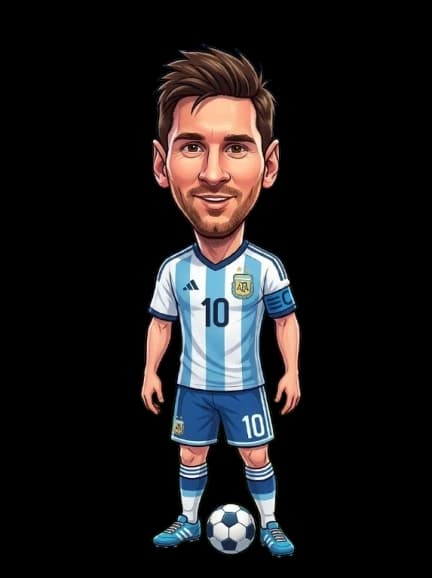

Watch Erling Haaland for five minutes and you can easily make the wrong conclusion. He walks. He waits. He sometimes appears almost detached from the action. There are sequences in which Manchester City circulate the ball around him while the striker barely moves more than a few metres. Then, suddenly, the game changes.
One defender takes half a step forward. A midfielder turns. A full-back receives the ball facing his own goal. A centre-back looks toward the ball instead of the striker. Haaland moves.
The movement may last only a few seconds. But those seconds are often enough.
That is the strange thing about Erling Haaland. His most important contribution to an attack is not always a touch, a pass or even a run. Sometimes it is the possibility of the run.
The phrase "Erling Haaland walking" became particularly searchable during the 2026 World Cup because tracking data gave supporters a numerical way to describe something they had already noticed with their eyes. Opta Analyst reported that Haaland averaged only 24.8 touches per 90 minutes at the tournament at the time of its analysis, while also recording an unusually high share of his distance through walking.
The interesting part was what happened after the walking. Haaland was still producing an enormous threat. Opta noted that he had taken 18 shots, with 17 of them coming first time, and his average expected goals per shot was exceptionally high among players with enough attempts.
So the viral question — "Why does Haaland walk so much?" — misses the more important question: what is he doing while he is walking?
Football movement is often judged visually. A player sprinting across the pitch looks active. A player standing or walking looks passive.
But attackers do not need to move continuously to influence defenders. A striker can create a problem simply by occupying a particular line of sight, standing between two defenders, threatening the space behind a back four or forcing a centre-back to keep checking over his shoulder.
Haaland is particularly dangerous because defenders cannot safely ignore him.
If a centre-back steps toward the ball, Haaland can attack the space behind him. If the centre-back drops too early, City can use the space in front of the defensive line. If two defenders stay focused on Haaland, another City player can potentially receive between or outside them.
The threat of movement can be as important as the movement itself.
One of the clearest examples came during Manchester City’s 4–0 Premier League victory over Bournemouth in August 2022. Haaland played 73 minutes and touched the ball only eight times.
On a conventional reading of attacking football, that sounds disastrous for a centre-forward.
But those eight touches included two shots and a key pass. More importantly, his movement helped manipulate the defensive structure around him.
The Guardian’s tactical analysis of that match pointed out that Haaland’s indirect influence mattered: defenders were being moved and space was being created even when the ball was nowhere near his feet.
This is one of the biggest misconceptions surrounding modern centre-forwards. A striker does not have to touch the ball frequently to be heavily involved in an attack.
There is another reason Haaland can appear unusually still: his movement is often trigger-based.
A trigger is an event that tells an attacker the time to move has arrived.
Before the trigger, Haaland may have no reason to sprint. After the trigger, half a second can be worth more than 30 seconds of unnecessary running.
This is why clips of Haaland walking can be misleading. The clip usually begins before the important event. The goal begins after it.
Haaland’s greatest tactical weapon may not be his speed or even his finishing. It may be the number of decisions he forces defenders to make.
Imagine a centre-back standing 25 metres from his own goal with Haaland somewhere near the defensive line.
The defender has several choices. Step forward and risk space behind. Drop back and potentially give City’s midfielders more room. Stay level and hope the pass never arrives. Follow Haaland if he checks toward the ball and potentially open another lane.
None of those decisions is comfortable.
That is what makes Haaland’s off-ball presence so valuable. His physical profile changes the cost of defensive mistakes.
Haaland is officially listed by the Premier League at 195 centimetres. That makes him an obvious aerial threat, but height alone does not explain his movement.
The unusual combination is height plus acceleration.
A tall striker who is slow can often be defended by holding a sensible distance. A fast striker who is small creates a different problem. Haaland combines the two profiles: defenders must respect the ball played over or across them while also respecting a sprint behind them.
That changes how close a defender can safely stand.
Move too close and Haaland can spin away. Move too far and he can receive or attack the cross. Hold the middle and City can manipulate the space around him.
This is where the "Haaland walking" debate becomes particularly interesting.
Elite football is not a competition to see who can sprint most often. Repeated high-intensity actions matter, but the value of a run depends on when it happens and whether the run changes the attacking situation.
Haaland’s game is built around contrast: very little movement followed by extremely violent acceleration.
The Independent documented an excellent example against Sevilla. Haaland was initially moving at almost walking pace, but when the attack developed and the passing opportunity appeared, he accelerated away from his marker and attacked the decisive space.
That contrast is important because defenders have to react to the acceleration rather than simply the distance covered.
A defender can become comfortable watching a striker jog. A defender cannot become comfortable if that jog can become a sprint in a fraction of a second.
Haaland repeatedly uses changes of speed rather than continuous movement. He can drift toward one defender, pause, move laterally, and then attack the gap once the defensive line changes.
The visual effect is almost deceptive. The defender sees a giant striker moving slowly. The next frame shows Haaland five metres away from where he was.
Manchester City’s possession structure makes Haaland’s unusual movement even more useful.
When City have sustained possession, opponents are often forced into a compact defensive block. That reduces the amount of open space available to Haaland.
Instead of constantly moving into occupied zones, Haaland can hold his position and wait for the structure to change.
Once a winger reaches the byline, a midfielder receives between the lines or a defender is dragged away, the geometry changes. Suddenly the space that did not exist two seconds earlier is available.
That is when Haaland becomes most dangerous.
Haaland’s movement cannot be separated from the players supplying him.
Kevin De Bruyne became famous for early deliveries into Haaland’s running lanes. Wingers can stretch the defensive line horizontally. Midfielders can occupy defenders between the lines. Full-backs can create width or overloads.
The striker is therefore not operating independently. His movement is part of a chain.
The goal may ultimately look like a simple finish, but the attack began several seconds earlier with positioning.
Another criticism frequently attached to Haaland is that many of his goals are simple finishes.
But simple finishes are often the product of complicated movement.
Getting to the correct position before the ball arrives is an attacking skill. Arriving at the far post before a defender recognises the danger is an attacking skill. Timing a run so that the pass arrives before the offside line moves is an attacking skill.
Haaland’s efficiency is partly the result of repeatedly getting himself into situations where the final action becomes easier.
The Premier League provides an extraordinary statistical illustration of this efficiency.
The important point is not that low touches automatically make a striker better. They do not.
The point is that Haaland has built an extraordinary scoring career without needing the enormous possession share associated with many elite attackers.
In December 2025, Haaland became the fastest player in Premier League history to reach 100 goals. He needed only 111 appearances, beating Alan Shearer’s previous record of 124.
The Premier League also noted that since Haaland arrived in England, nobody had scored at anything close to his rate. At the 100-goal milestone, Mohamed Salah was second with 70 goals since August 2022.
That does not prove that walking causes goals. It demonstrates something more useful: Haaland’s attacking model can produce extraordinary output without requiring constant involvement in possession.
This is perhaps the most fascinating part of his recent UEFA interview.
When describing transition situations, Haaland explained that his first thought is to look at the defenders. Then he checks his teammates. Then he looks at the space before deciding where to try to receive the ball.
That description tells us something important about the walking.
His body may appear inactive, but his attention is not necessarily inactive. He is reading the defensive structure and waiting for information.
In other words, the walk can be the pause before the decision.
Calling Haaland lazy because he walks confuses movement volume with tactical responsibility.
A genuinely ineffective striker can disappear because he is not creating danger, not pressing effectively, not offering a passing option and not moving defenders.
Haaland can disappear from the visible flow of the match while still forcing defenders to account for him.
That distinction matters.
There are certainly matches where Haaland’s pressing, link play or involvement can be criticised. Low touches do not automatically equal tactical brilliance. Football is too complex for that.
But the evidence is strong enough to reject the simplistic idea that every period of walking represents laziness.
The most accurate way to understand Haaland is not to focus on how much he walks or how much he runs.
Focus on the contrast between the two.
The contrast is what makes him so difficult to read.
Football has spent years moving toward attackers who participate heavily in build-up play.
False nines drop deep. Complete forwards combine. Inside forwards create chances. Playmakers become goalscorers.
Haaland represents a partial return to a different idea: the centre-forward as an extreme specialist.
He does not need to be everywhere because his presence in one particular zone can be more valuable than another player’s presence in five zones.
That is why his arrival changed the tactical possibilities of Manchester City. The team could once again play around an unmistakable penalty-box reference point while still maintaining its possession principles.
There is an important caveat.
It would be wrong to turn Haaland’s walking into a universal football philosophy and claim that less running always means smarter football.
Haaland operates within a particular tactical environment. Manchester City can dominate possession, create territorial pressure and surround him with elite passers. Norway can build its own structures around his strengths.
Another striker copying the same movement pattern without Haaland’s acceleration, positioning, finishing and supporting structure would probably just look disconnected from the game.
The lesson is not "walk more." The lesson is "make your movement meaningful."
This is the paradox that makes Haaland such an interesting striker to study.
A midfielder can dominate a match by touching the ball 100 times. A winger can dominate by repeatedly beating his full-back. A goalkeeper can dominate through saves.
Haaland can dominate through anticipation.
He occupies defenders. He threatens depth. He stretches the last line. He waits for mistakes. He attacks the moment a passing lane opens.
And because the final movement can be so short, the preparation can disappear from the highlight.
When Haaland scores, the final image is often simple.
A cross. A touch. A finish.
But the actual attacking sequence can begin with Haaland standing between two defenders several seconds earlier.
The defender has to decide whether to follow him. A midfielder has to decide whether to cover. A full-back has to decide whether to narrow. A winger has to decide whether to track a runner.
By the time the ball reaches Haaland, several defensive decisions have already been made.
That is why judging him only by his final touch can be so misleading.
Haaland’s popularity has created a useful problem for football analysis: traditional visual statistics do not always capture what elite attackers are doing.
Goals, assists and touches remain important. But they do not tell the complete story of a striker’s movement.
Future analysis will increasingly examine where a striker stands before a chance, which defender moves because of him, how quickly he accelerates after a trigger, how often he attacks the blind side and whether his movement changes the probability of a teammate receiving the ball.
Haaland is almost a perfect case study because his game is so extreme.
Haaland’s walking should not automatically be interpreted as laziness. His game relies heavily on positioning, anticipation and short explosive movements. He can remain relatively still while waiting for a defensive or passing trigger, then accelerate into high-value space.
His touch volume is relatively low for a superstar attacker. Opta Analyst reported 24.8 touches per 90 at the 2026 World Cup at the time of its England analysis. In the 2025/26 Premier League season, StatMuse records 763 touches across 35 appearances.
The label is too simplistic. Haaland can have periods of limited movement, and his defensive contribution can be debated, but his off-ball positioning repeatedly creates problems for defenders. Low visible activity does not necessarily mean low tactical involvement.
The Premier League lists Haaland at 195 centimetres. His height becomes especially dangerous when combined with his acceleration, timing and ability to attack crosses and space behind defensive lines.
His unusual combination of height, speed, acceleration, movement timing and elite finishing allows him to remain a highly dangerous attacking reference without needing constant possession.
The easiest way to misunderstand Erling Haaland is to judge him by how busy he looks.
He is not designed to look busy.
He is designed to become dangerous at the exact moment the defence becomes vulnerable.
That is why the walking clips are so fascinating. They capture the least dramatic part of his attacking process. The sprint is obvious. The finish is obvious. The difficult part is understanding what happened before either one.
Haaland’s genius is not that he can run less and score more. It is that he has become exceptionally good at deciding when a run is worth making.
In a sport where milliseconds can separate a striker from a defender, that difference can turn an apparently quiet afternoon into another goal.
So the next time Erling Haaland is walking while Manchester City attack, watch the defenders instead.
That is where the real story is happening.
Haaland discusses his finishing, transition decisions, movement and the way he evaluates defenders, teammates and space.
Provides World Cup touch, walking-distance, shot and chance-quality data surrounding Haaland in 2026.
Official Premier League record showing Haaland reached 100 goals in 111 appearances.
Official statistical breakdown of Haaland’s scoring rate since arriving at Manchester City.
Official record listing Haaland’s 36-goal Premier League season and other competition records.
Official Premier League record for Haaland reaching 100 goals and assists in 94 matches.
Tactical analysis of Haaland’s low-touch performance against Bournemouth and the space created by his movement.
Detailed example of Haaland moving at walking pace before suddenly accelerating into scoring space.
Contemporary analysis of Haaland’s development and his ability to remain decisive despite appearing quiet during matches.
UEFA tactical analysis showing Haaland’s positioning, movement and finishing within Manchester City’s attacking structure.
Shows how Manchester City’s wide attacks and movements create decisive central spaces for Haaland.
Official confirmation that Haaland finished 2025/26 with 27 Premier League goals and won his third Golden Boot.
