One World Cup Door Closed in Dallas. The Other Closed Behind It in New Jersey


Cristiano Ronaldo's World Cup story ended in Dallas on July 6, 2026. It ended in the most fittingly cruel way possible: not with a spectacular final goal, not with a farewell trophy, and not even with a dramatic penalty shootout, but with a single late goal that arrived when Portugal were already beginning to believe extra time was inevitable.
Mikel Merino's 91st-minute finish sent Spain into the quarter-finals and Portugal home. For Ronaldo, it closed a 20-year World Cup journey that began in Germany in 2006 and passed through six different editions of football's biggest tournament.
The strange thing about Ronaldo's World Cup story is that it contains almost everything except the ending football history usually remembers most. There were records. There were goals. There were iconic celebrations, heartbreaking exits, extraordinary longevity and moments when he seemed to bend the age curve itself. But there was never a World Cup final.
And on July 6, Ronaldo confirmed something that made the defeat heavier than an ordinary elimination: 2026 was his final World Cup. There would be no seventh tournament and no final attempt in 2030.
I gave my best and I leave with a clear conscience.
Those were Ronaldo's words after the Spain defeat, as reported by FIFA. They were remarkably calm for a player whose career has so often been defined by refusing to accept the limits placed in front of him.
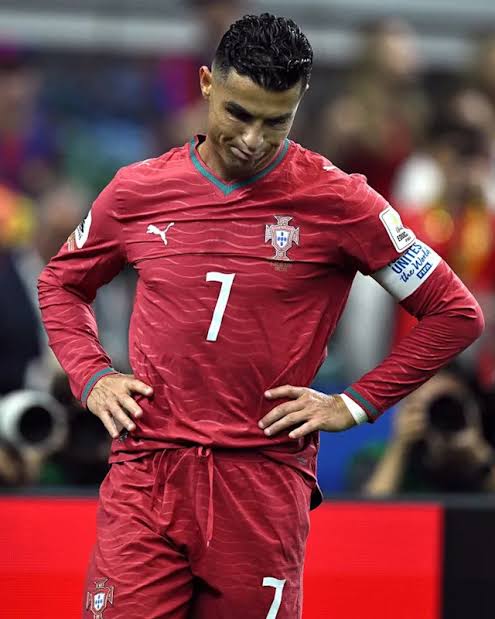
Portugal entered the Round of 16 against Spain with something much more valuable than nostalgia: a realistic chance to continue. Ronaldo had already scored three times in the tournament, Portugal had survived the expanded knockout structure, and Spain were not invincible.
But the match became a battle of patience. Spain had the greater control of the game, while Portugal relied on moments, defensive resistance and the possibility that Ronaldo might find one final opening.
Portugal came close. Nuno Mendes struck the crossbar with a deflected effort shortly before half-time, while Diogo Costa repeatedly kept Spain from taking control of the scoreboard.
Ronaldo also had his opportunities. One of the most memorable came when he attempted an ambitious bicycle kick that Unai Simón was able to deal with. At 41, the movement itself was remarkable. The outcome was not.
Then came the moment Portugal could not survive. Ferran Torres took a quick free-kick, Spain moved before Portugal could properly reset, and Mikel Merino finished in the 91st minute.
The goal was not spectacular. That almost made it more painful. It was a goal of awareness, timing and movement — exactly the kind of small advantage that decides knockout football.
Spain had found the one opening. Portugal had run out of time.
There is an important distinction when judging Ronaldo's final World Cup. The question was never whether the 41-year-old could still score goals. He could.
The more difficult question was whether Portugal could build a tournament-winning structure around a striker whose greatest weapons had changed over time.
The Ronaldo of Manchester United's early years could attack space from almost anywhere. The Ronaldo of Real Madrid's peak could destroy a defence through acceleration, movement and extraordinary finishing. The Ronaldo of his later years became something different: a penalty-area specialist, a reference point, a player whose value increasingly depended on timing rather than volume of movement.
That evolution should not be mistaken for failure. It is actually one of the most impressive aspects of his career. Ronaldo kept changing because football kept changing — and because his body could no longer offer exactly what it had offered at 24.
At 41, the question was not whether Ronaldo could still produce a decisive action. It was whether Portugal could consistently create the conditions for him to produce one.
Ronaldo's 2026 tournament ended with three goals, and each tells a slightly different story about the player he had become.
The Uzbekistan goals were classic Ronaldo in different ways. One showed anticipation and finishing instinct inside the area; the other came from a perfectly timed run after he communicated his movement to Bruno Fernandes.
The Croatia goal was historically important for another reason. Ronaldo had scored plenty of World Cup goals before 2026, but none had come in the knockout rounds. His penalty against Croatia finally removed that strange statistical gap.
It meant that even in his final tournament, Ronaldo was still adding a new line to a record book that already seemed full.
The easiest way to underestimate Ronaldo's World Cup career is to judge it only by the trophy column. Look instead at the longevity.
The numbers are extraordinary. FIFA records Ronaldo with 27 World Cup appearances and 11 goals, placing him second on the all-time appearance list behind Lionel Messi.
But the bigger achievement is hidden inside the timeline. Twenty years separated Ronaldo's first World Cup appearance from his last. The teenager who scored against Iran in Germany in 2006 was still wearing the same country's shirt at 41.
Ronaldo's most distinctive World Cup record is not his total number of goals. It is the fact that he scored in six different editions of the tournament.
He scored at every World Cup from 2006 through 2026. FIFA confirmed that no other player had achieved that before him.
That record required far more than scoring ability. It required surviving changes in managers, teammates, tactical systems, generations and physical expectations. It required remaining good enough to make six squads and important enough to play.
A player can have a brilliant five-year peak. Ronaldo effectively produced a World Cup-level career across two decades.
When Ronaldo scored against Croatia, he was 41 years and 147 days old. FIFA lists him as the second-oldest player to score at a World Cup, behind Roger Milla.
But the more remarkable detail is what that age means in context. Ronaldo was not simply present at the tournament as a ceremonial veteran. He started matches, scored, captained Portugal and reached the knockout stage.
There is a tendency to describe extreme longevity as if it is purely a physical phenomenon. It is not. It is also tactical intelligence, preparation, recovery, adaptation and the ability to understand what parts of your game need to change.
Ronaldo's final World Cup therefore tells us as much about adaptation as it does about decline.
It would be easy to make Portugal's elimination entirely about Ronaldo. That would also miss what Spain had built.
Spain eventually won the entire tournament, and they did it by constructing one of the most difficult defensive records in World Cup history.
That changes the interpretation of Dallas. Portugal did not simply lose because Ronaldo failed to score. They ran into a Spain side that eventually proved capable of shutting down almost everyone.
Spain's defence conceded once in eight matches. Portugal became one of the teams that could not find a way through.
This is what makes World Cups so brutal for individual legacies.
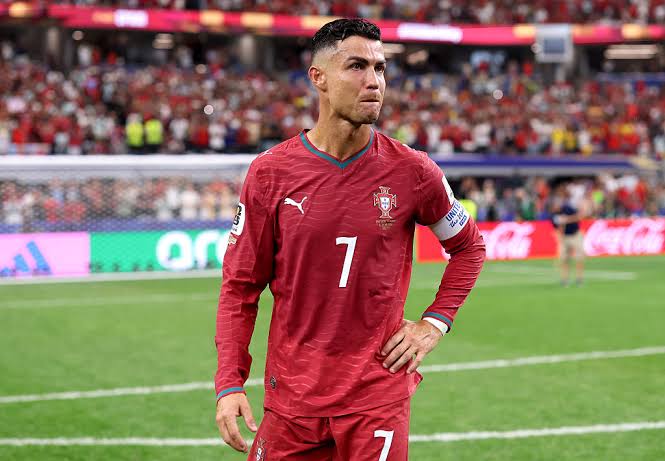
A player can spend an entire career accumulating evidence of greatness, only for one 90-minute match to become the image that dominates the memory. Ronaldo's six World Cups contained 27 appearances and 11 goals. But the photograph people will remember from 2026 may simply be Ronaldo walking away from the pitch after Spain scored.
The same thing happened to Messi thirteen days later.
When Ronaldo left the tournament on July 6, Lionel Messi still had a chance to write a different ending. Argentina reached the final against Spain at New York New Jersey Stadium on July 19.
For Messi, it was an entirely different World Cup story. He arrived as the reigning champion, having already completed the one achievement that had followed him throughout his career. Ronaldo was chasing the missing trophy. Messi was defending it.
But Spain controlled the final. Ferran Torres scored in the 106th minute after Nico Williams' header created the opening, and Spain won 1-0 to become world champions for the second time.
Messi finished with the Silver Ball, while Rodri took the Golden Ball. Spain conceded only one goal throughout their eight-match campaign.
So the symmetry became impossible to ignore.
Ronaldo's door closed in Dallas. Messi's closed thirteen days later in New Jersey.
The two defining players of their generation left the same World Cup without the trophy in their hands — although their circumstances could not have been more different.
This is where the debate becomes uncomfortable.
Ronaldo's career includes five UEFA Champions League titles, five Ballon d'Or awards, league championships in England, Spain and Italy, Euro 2016 and two UEFA Nations League titles with Portugal.
UEFA also records him as the Champions League's all-time leading scorer, with 140 goals, and the first player to win the competition five times.
Internationally, the numbers are even harder to dismiss. By July 20, 2026, UEFA recorded Ronaldo with 146 goals in 233 appearances for Portugal — the men's international records for both goals and appearances.
Portugal also did not finish Ronaldo's international era empty-handed. He captained the country to Euro 2016 and Nations League victories in 2019 and 2025.
So the World Cup is not the missing piece in an otherwise unfinished career. It is the missing piece in an otherwise extraordinarily complete international story.
Yes — but probably not in the way the simplest arguments suggest.
Winning a World Cup would have changed the way Ronaldo's career is discussed. There is no point pretending otherwise. International tournaments carry enormous historical weight, and the World Cup is the largest prize in the sport.
But saying the missing trophy damages one part of the résumé is very different from saying it invalidates everything else.
Ronaldo became Portugal's greatest scorer, men's international football's record goalscorer, one of the most decorated Champions League players ever and the first man to score at six World Cups. None of those achievements disappear because Spain scored in the 91st minute in Dallas.
There is another part of the Ronaldo story that gets overlooked whenever the World Cup debate begins: Portugal's transformation.
Before Ronaldo's generation, Portugal had never won the European Championship or UEFA Nations League. Ronaldo was captain when they won Euro 2016, and he later lifted Nations League trophies in 2019 and 2025.
That does not replace a World Cup. Nothing does.
But it does change the idea that Ronaldo somehow failed Portugal internationally. He helped turn Portugal from a talented European nation into a country capable of repeatedly winning major international silverware.
Forget the goals for a moment. Forget the trophies, records and arguments.
The number that best explains Ronaldo's World Cup career might simply be 20 years.
Twenty years separated his first World Cup in Germany from his final tournament in North America. Four different generations of Portuguese footballers came through around him. Managers changed. Tactical systems changed. His own role changed dramatically.
The sport changed around him, and he kept finding a way to remain relevant inside it.
That may ultimately be more difficult to reproduce than winning a single tournament.
Dallas did not end Cristiano Ronaldo's greatness.
It ended the possibility of adding one final chapter to his World Cup record.
There will be no seventh tournament. No late-career qualification campaign. No 2030 home-soil fairytale. No final attempt to turn six World Cups into seven.
That is why the defeat feels larger than the scoreline.
Ronaldo knew it. Portugal knew it. The football world knew it.
The perfect ending never arrived.
Ronaldo never lifted the World Cup. He never played in a World Cup final. His best finish was fourth place in 2006, when he was still a teenager becoming a superstar.
But perhaps the final chapter was never really supposed to be perfect.
Football rarely gives its greatest players exactly what they want. Some get the trophies but not the longevity. Some get the longevity but not the international glory. Some win everything and still lose the one match that becomes part of their mythology.
Ronaldo's story belongs somewhere in that complicated category.
He leaves the World Cup with 27 appearances, 11 goals, six tournaments and a record no one had ever achieved before him: scoring at every World Cup he played.
He leaves international football as Portugal's greatest goalscorer and the men's game's all-time international scoring leader.
And he leaves with one trophy missing.
There is no need to pretend the missing World Cup does not matter. It does. A World Cup would have given Ronaldo's legacy another dimension and perhaps ended one of football's longest debates before it even began.
But the absence of one trophy should not be allowed to become the entire story.
Cristiano Ronaldo's World Cup career was not a story of failure. It was a story of extraordinary persistence that ended without the final prize. Six tournaments. Twenty years. Twenty-seven appearances. Eleven goals. Goals in every edition. A knockout-stage goal at 41. And finally, a quiet walk off the pitch in Dallas.
Thirteen days later, Messi walked the same road in New Jersey, only with a very different legacy already secured.
Two doors closed. One generation ended with them.
The World Cup trophy was never Ronaldo's. But the era he helped define was.
Ronaldo confirms 2026 was his final World Cup, his six-tournament history, 27 appearances and 11 goals.
Confirms Ronaldo became the first player to score in six different World Cup editions.
Official match context for Portugal-Spain and Spain’s late winning goal.
Breakdown of Ronaldo’s three goals at the 2026 World Cup and his six-edition scoring record.
Official report of Spain’s 1-0 extra-time victory over Argentina.
Official tournament awards including Rodri’s Golden Ball, Messi’s Silver Ball and Mbappe’s Golden Boot.
Official appearance records showing Ronaldo finished second all-time with 27 World Cup appearances.
Ronaldo’s 41 years and 147 days goal against Croatia made him the second-oldest World Cup goalscorer.
Ronaldo’s Portugal record: 146 international goals and 233 appearances as of July 20, 2026.
Context for Ronaldo’s Champions League and European records.
Context for Ronaldo’s international trophy legacy with Portugal.
Analytical context on Ronaldo’s evolution, World Cup longevity and final tournament.
Match analysis and context around Ronaldo’s final World Cup appearance.
Independent match report confirming Nuno Mendes’ crossbar effort and Merino’s late winner.
Contemporary match reporting and tactical context from Dallas.
